
Why You Overthink Everything — and How to Finally Trust Yourself Again
You’re not overthinking because you’re weak. You’re overthinking because your mind is trying to feel safe. Learn how to break the analysis loop and rebuild self-trust.
Seval-Ilkay Öztürk
2/24/20264 min read

The Moment Clarity Begins to Dissolve
You have an idea. A decision. A plan. At first, it feels clear—almost obvious. And then, your mind intervenes. It begins asking questions that sound responsible: Is this the right approach? What if I regret it? What if I’m missing something?
You open another tab. You write another list. You adjust the plan again. From the outside, it looks like discipline. From the inside, it feels like pressure. Slowly, the clarity you had in the beginning dissolves—not because you learned something new, but because you stopped trusting the version of yourself that was ready to move. Overthinking rarely feels like avoidance; it feels like preparation. That is why it is so difficult to recognize.
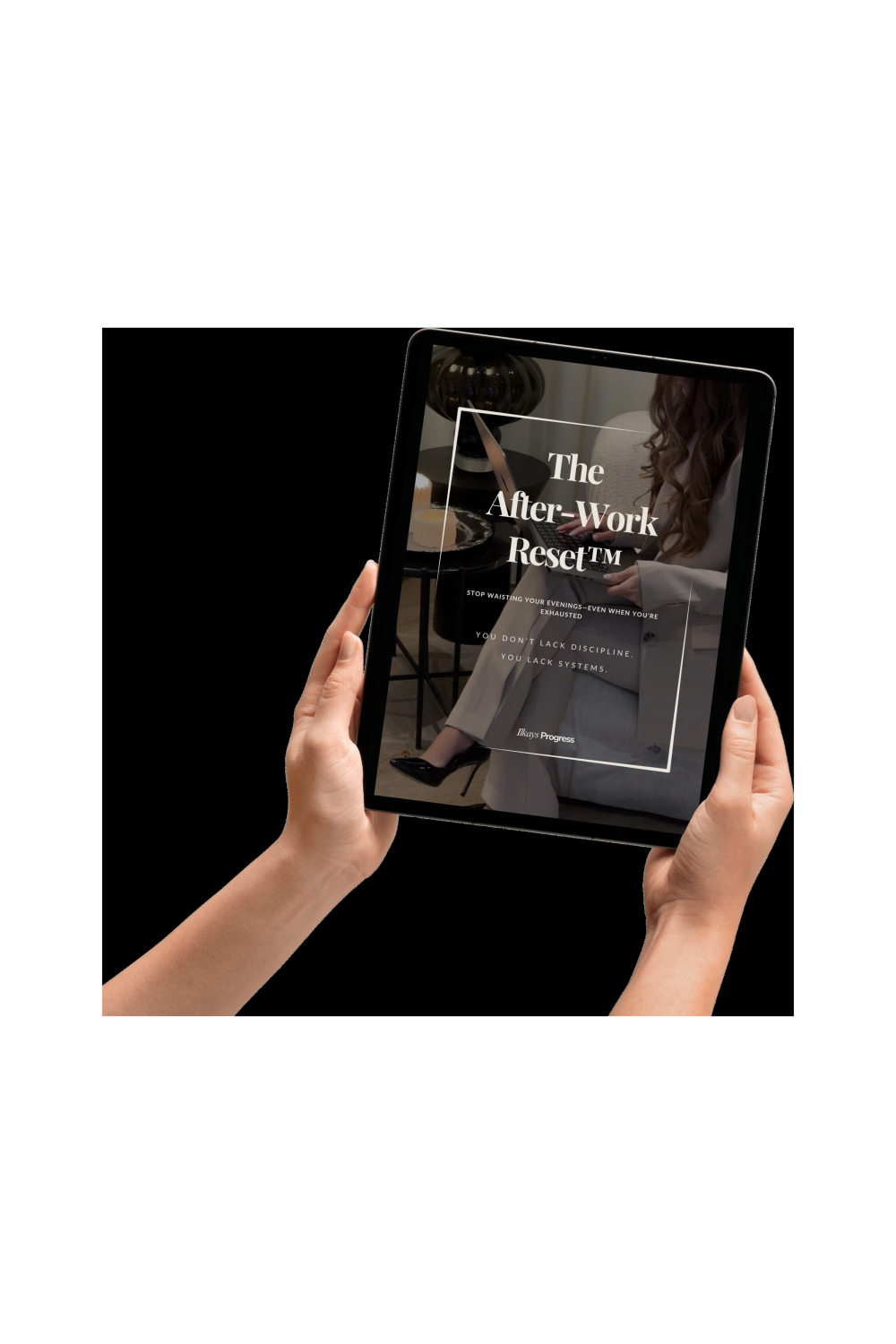
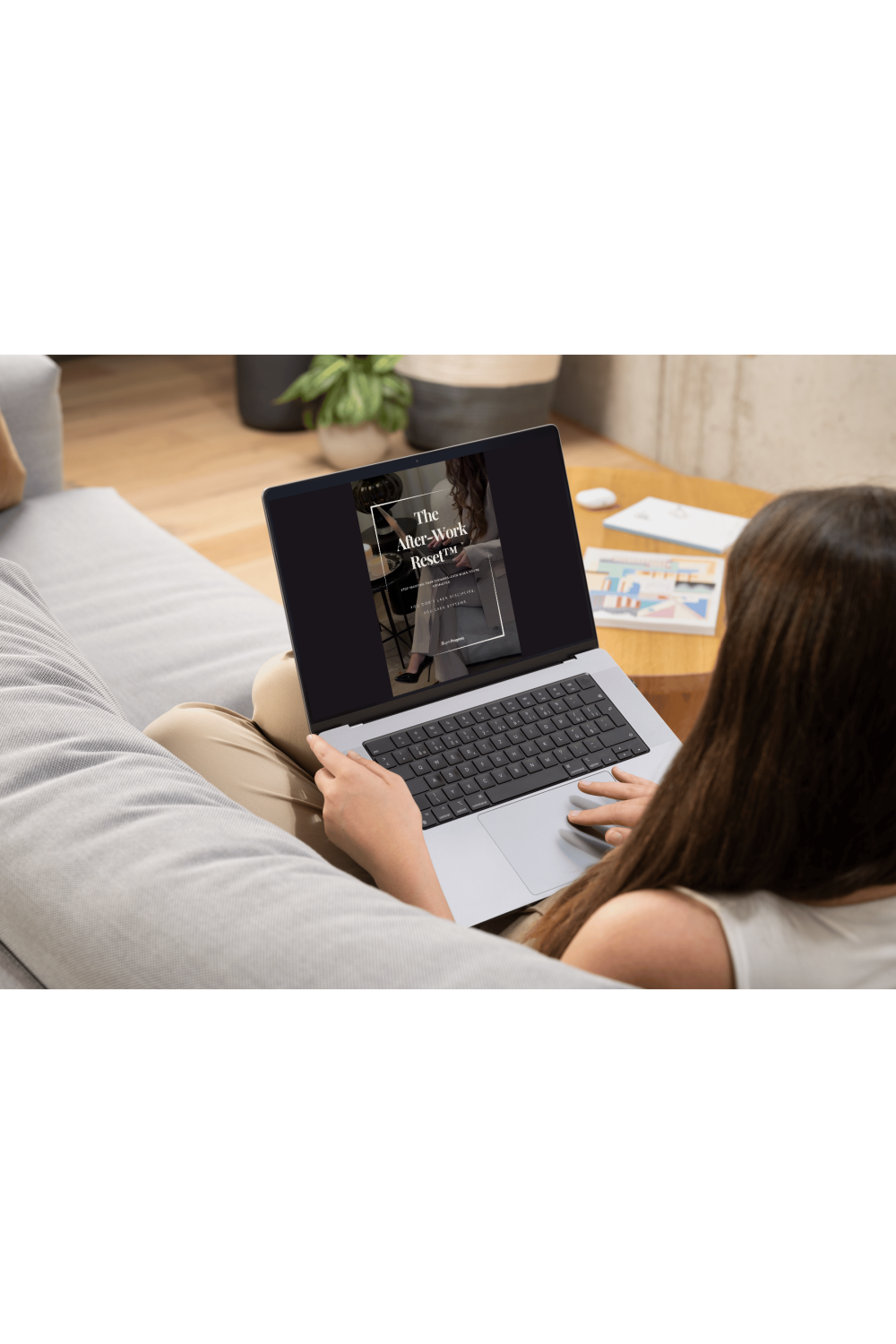
If you recognize this cycle, you aren't lacking discipline—you're likely paying a "Self-Trust Tax" on every decision. You can [download the After-Work Reset here] to see exactly where your internal credit score is hitting zero before the loop resets.

The Hidden Promise of Analysis
At the center of overthinking is not confusion; it is a quiet attempt to eliminate emotional risk. You believe that if you analyze something long enough, you will reach a point where the decision feels completely safe—where there is no possibility of failure or discomfort.
This creates the Analysis Safety Loop. Your mind learns that thinking reduces anxiety temporarily. Each time you analyze instead of act, you experience relief. The nervous system interprets this postponement as "safety" and asks you to think again. But relief is not progress. Thinking didn't solve the problem; it simply postponed exposure to reality.
Optimization as High-Level Avoidance
Overthinking often disguises itself as responsibility. You tell yourself you are refining, optimizing, and making sure you do it "correctly." But optimization has a hidden cost when it becomes endless. Most people believe progress comes from perfecting every variable before beginning. In reality, this dilutes your focus until nothing moves.
Progress does not come from optimizing everything. It comes from identifying the one constraint holding you back and moving there. Overthinking prevents this because it spreads your attention across dozens of imagined problems instead of the one real action in front of you. It feels productive, but it is immobile.
Optimization is often just "Anxiety in a Trench Coat." Instead of perfecting a broken blueprint, you need to install a system that makes execution inevitable. I’ve mapped out the 3-step "Operator" framework to help you stop negotiating and start moving in [this freebie].

The Danger of "Or" Thinking
Part of the pattern is binary thinking—the quiet belief that something must either fully work or fully fail. If I struggle, it means I wasn’t ready. If I feel afraid, I shouldn't do it. You search for absolute certainty before allowing yourself to begin.
But reality rarely offers certainty; it offers feedback. When you replace "Or" with "And," something changes internally. This is harder than I expected, and I am still learning. I feel resistance, and I can continue. Nuance interrupts the mind’s attempt to escape discomfort through absolute conclusions. It creates the space required to stay in motion.
Emotion Disguised as Logic
There is a quieter force beneath overthinking: Emotional Filtering. When you feel anxious, your thoughts become more cautious. When you feel urgency, everything appears more fragile. In these states, the mind produces thoughts that match the emotion—not necessarily the truth.
The nervous system prioritizes immediate relief over long-term alignment. It encourages withdrawal and reconsideration, not because those actions serve your future, but because they reduce discomfort now. Overthinking is often just the mind attempting to regulate emotion indirectly. It gives you the illusion of control while you reset your progress to zero.
Reclaiming Authorship
Overthinking is not a character flaw; it is an adaptation. At some point, your mind learned that being cautious protected you. But the strategy that protects you from discomfort also prevents you from accessing growth. Self-trust does not form from thinking correctly; it forms from witnessing yourself remain present during uncertainty.
Responsibility enters here—not as blame, but as authorship. You cannot control whether uncertainty exists, but you can notice when thinking has shifted from seeking clarity to seeking safety. You can choose to stay with the decision long enough for reality—not fear—to provide the next data point.
The Activating Question
Before you redesign the plan or search for a clearer answer, pause and ask yourself: Am I trying to understand—or am I trying to feel safe?
The Audit is the diagnosis. The 7-Day Protocol is the cure. If you recognize yourself in this loop, you don’t need more information. You need a way to interrupt the pattern in real time. Self-trust is built through witnessing yourself act without guarantees. Download the [After-Work Reset Freebie] to replace fleeting motivation with a structural system that guarantees the daily consistency needed for long-term winning.
Regulate — Align — Momentum
info@ilkaysprogress.com
© 2025. All rights reserved.